The Voice of Practice: How Technology is Challenging the Conventional Wisdom of Ownership

A GUEST COMMENTARY BY ERIK CHAN, TECH ENTREPRENEUR & CO-FOUNDER OF ROCKETCLUB.CO

So here it comes, the first The Voice of Practice contribution. What follows is a guest commentary by tech entrepreneur Erik Chan. Erik is the co-founder of RocketClub (www.rocketclub.co), an online platform that empowers people to earn shares of new business ideas by promoting and adopting them from the start. In his commentary he talks about how technology has changed the way ownership is viewed and what this means for the tech industry. Before we let Erik speak, however, let us from The Science of Ownership give you a small scientific bracket to the topic:

Sophisticated online social technologies have substantially altered the way consumers and companies interact and create value (Bernoff & Li 2008; Prahalad & Ramaswamy 2004). Traditionally, the former were simply listening to what the latter had to say and offer. Now, consumers are invited to actively participate in a variety of business-related decisions on social media and the likes (Berthon et al. 2008, Hautz et al. 2014). This power shift from the firm to the consumer has paved the way for novel concepts and business models like crowdfunding (Ordanini et al. 2011, Thürridl & Kamleitner 2016).

It has changed how new ideas, products and even firms are created. This, in turn, is challenging our conventional understanding of ownership – the line between what (is perceived to) belongs to the company and what to the consumers is becoming increasingly blurred. From literature we know that there are three major routes to ownership: control, intimate knowledge, and investment of the self (Pierce et al. 2001, 2003). When individuals co-create with companies or contribute their personal resources, all three routes may actually be activated. Consumers are able to a) control the outcome of the final product, service, or venture, b) acquire knowledge over time, and c) invest their own resources, ideas, values and identity into the process. In turn, they may start to feel that the respective product, idea, or venture is also “theirs”.

So much for the theory, let’s hear what Erik has to say about it:

In the technology startup industry, the idea of ownership holds much significance. We have seen controversies over who owned the idea behind successful companies of today; who owned the trademarks, who owned the code, and of course, who owned the equity. Each and every input in a company can have contributed to its success. While many controversies focus on the legal (and financial) components of successful companies, there is also a factor of pride. For cofounders, early employees, investors, it’s the opportunity to proclaim “I did this. I saw the potential in it. I made it happen. I was part of it.” Often, founders end up suing the company they founded for more than a share in the financial rewards, it’s also because they want to be recognized as an ‘owner’ or ‘contributor’.  

Recently, we have seen a lot of emphasis on a startup company’s initial users or customers. Ycombinator, the prominent startup accelerator who incubated successful companies including Reddit, Airbnb, and Dropbox, evangelizes the idea of acquiring 100 customers who love what your company offers than 10,000 who just care (see http://blogs.wsj.com/accelerators/2014/06/03/jessica-livingston-why-startups-need-to-focus-on-sales-not-marketing/). The idea is to acquire 100 customers who love your product so much they are willing to use it even when no one else is using it, bare through multiple product iterations, and deal with product bugs because they see and believe in the potential. These early customers believe that one day, just like the founder, they will be able to say “I was part of it.” Not surprisingly, the involvement of these customers also make them feel as if they ‘own’ the idea as well.

Although largely unscientific, tech startups do many things to try increase their users’ feeling of ownership’. Traditionally, these include awarding users with digital points and badges, offering physical articles like t-shirts and stickers, early access to new features, throwing events, and other exclusive priorities. Success examples include early Reddit users receiving t-shirts and handwritten christmas cards, the first AirBnb hosts welcoming the founders to sleep at their apartments, Facebook users staking their personal profile URLs and many more. 

Due to high startup company valuations today (cash rich startups offering an assortment of perks and freebies to their customers), many companies starting out face the challenge of whether a t-shirt is enough for its early users to feel a sense of ownership. Having struggled with rewarding early adopters for their involvement at my previous companies, I decided to build a platform called RocketClub to help companies distribute a real stake in the company to these early customers and supporters. The idea is that it is only a matter of time until early customers, critical to a company’s success, will transition from ‘psychological owners’ to also become real, legal owners. Consequently, we learned through numerous discussions with both company founders and our community of users that the feeling of ownership in a startup is not determined solely by equity ownership. And since, RocketClub has expanded to offering other means of facilitating this ownership through examples such as access to the founders, a say in the development of the product and features, as well as access to ongoing developments at the company, and many others.

Given the dizzying array of products new and old in the market today, entrepreneurs and managers are turning to incentivizing early users and customers to become part of the process/experience. The majority of startup companies fail today because they lack adoption from early stakeholder customers. Imparting ownership onto your early customers is one of few ways to help companies build a bridge between them. No company succeeds without a following behind it and early adoption goes hand in hand with imparting the psychological feeling of ownership.

What is your take? Do you agree with Erik or do you have contrary beliefs? Please use the comment section to share your thoughts with us and our readers.

About Erik:

A serial entrepreneur and technologist, Erik Chan is founder CEO of RocketClub. Previously, he cofounded MicroPay Technology, a game payments company, and social and online game companies 28wins and Bottomless Pit Games. Prior to Erik becoming an entrepreneur, he spent time at Activision Blizzard and Midway Games first as a system engineer and then as a producer. 

Erik holds a MSc in Management from Massachusetts Institute of Technology, a MBA from Tsinghua University, and a BSc in Biomedical engineering with computer science from Johns Hopkins University. Erik Chan also spent time doing research at the Center of Bits and Atoms and the Software Agents group at the MIT Media lab.

Editor’s note:

  • For references to the articles mentioned in this post, please visit our Links & Resources Section


Introducing Our New Category: The Voice of Practice

voiceofpractice

Dear community,

Science – including The Science of Ownership – would not matter as much, if it had no implications for and would not be inspired by the real world out there. Though The Science of Ownership is primarily about research on the notion of ownership, we decided to extend our current lens and introduce a brand new category to this blog: The Voice of Practice.

As the name already suggests, we are trying to get practitioners and non-researchers views to find out how, why, when, and most importantly where the experience of ownership strikes and impacts our daily lives. We will co-operate with industry experts and potentially also interested lay people. We will give them the chance to reflect on the topic of ownership based on their practical know-how and everyday experiences. Sometimes, we will invite people. At other times, we will introduce individuals who have approached us.

Either way, we are excited to see how this new category will contribute to our vision: to create a much-needed and unified understanding of the diverse and fascinating concept of ownership.

If you have comments or questions on The Voice of Practice or would like to see a particular voice featured, please feel free to contact us anytime. For now, we wish you a lovely week.

All the best,

The Science of Ownership Team

News from the World of Ownership

We acknowledge that it has been rather quiet here on The Science of Ownership in the past couple of weeks. Fortunately, we are able to counteract this inactivity today by providing our readers with two fantastic updates:

(1) Special Section on Ownership in the Journal of Behavioral and Experimental Economics

The Special Section on Ownership in the Journal of Behavioral and Experimental Economics has finally been published with the October 2015 issue (Volume 58). For the interested reader we strongly recommend a peak into the articles, which are online at: http://www.journals.elsevier.com/journal-of-behavioral-and-experimental-economics/recent-articles

A great introduction to the topic co-authored by the editors of this special section Bernadette Kamleitner and Stephan Dickert can be found here: http://www.sciencedirect.com/science/article/pii/S2214804315000701

(2) Special Session on Psychological Ownership at ACR 2015

Together with hundreds of consumer researchers from across the globe, we traveled to the ACR Association for Consumer Research North America Conference 2015 in the beginning of October this year. Apart from enjoying New Orleans, LA, where the conference was held, we listened to lots of great presentations and talked to amazing researchers, which made it really hard to leave afterwards.

What got us really excited, though, was the chance to witness that research on psychological ownership in the consumer behavior domain is getting more visible and popular by the day. At this year’s conference, our US colleagues organized yet another symposium that focused on this topic. The special session, which was chaired by Jaeyeon Chung from Columbia Business School, particularly focused on the “Antecedents and Consequences of Psychological Ownership” and included work from names that are no strangers to the field: Joann Peck (University of Wisconsin – Madison), Suzanne Shu (UCLA), Liad Weiss (University of Wisconsin – Madison), Gita Johar (Columbia Business School), Jaeyeon Chung (Columbia Business School), Yanping Tu (University of Chicago) and Ayelet Fishbach (University of Chicago). We were lucky to be able to publish an outline of the special session including an introduction to the session as well as short abstracts of the individual talks. Thank you, Jaeyeon, for helping us out and thank you to the others who agreed to make this information available here on The Science of Ownership.

You can find all information about the special session at here.


The Two Faces of Ownership: Special Section on (Psychological) Ownership and Economic Decisions has arrived!

By Bernadette Kamleitner & Stephan Dickert

As the observant readers of this ownership blog are bound to know, many aspects of our daily decisions and routines revolve around questions related to ownership. Sometimes we pay close attention to what is “ours”, other times we have little awareness of and care for whose possession something is, or we freely share consumption goods (such as food), services (e.g., giving someone a lift), and advice. But how can we make progress on a phenomenon that is enmeshed in different approaches and frameworks, we hear you ask… Fret not, because just in time another special section on Psychological Ownership has arrived to save the day and highlight some facets of the phenomenon!

We gladly announce that all the proofs of our special section have cleared the editing stage and that the contributions are now available online (http://www.journals.elsevier.com/journal-of-behavioral-and-experimental-economics/recent-articles/); the journey that we as a team started in 2013, with the workshop on psychological ownership, has made another step forward towards providing us with a better understanding of the multifaceted influences of ownership.

The special section consists of five exciting papers and a short introduction to the topic by us (A big thank you to all contributors, reviewers, and in particular Ofer Azar for making this special section possible!). What we set out to do is to highlight the two faces of ownership, the legal and the psychological, and their various links to an explicitly varied set of economic decisions in an explicitly varied set of contexts. That is precisely what we got. Jointly the contributions manage to sketch large stretches of the vast potential scope of ownership research. The contributions help understand how legal ownership over something changes one’s attitude and treatment of one’s possessions (e.g., Arora, Bert, Podesta & Krantz, 2015), how ownership history (Wang, Ong, and Tang (2015) and congruence between oneself and the consumption good can change how much we value owning something (Thomas, Yeh, and Jewell, 2015), how psychological ownership can be a result of how financial decisions are made (Kirk, McSherry, & Swain, 2015), and whether being ostracized influences psychological ownership (Walasek, Matthews, & Rakow, 2015).

Given the pervasiveness of ownership as a phenomenon, these insights may help us to identify possible implications of changes to everyday life. And changes we see. In a time characterized by demographic change and social mobility, people are confronted with a world in which things constantly speed up: Potential de-individualization can be an ailment resulting from the speed at which our society plows forward. (Psychological) possessions could and are used to act as an antidote that is sometimes within a moment’s reach. It takes less than a second to post something on the internet and make it instantly available around the globe. It also takes less than a minute to order and potentially download nearly any digital product. For some goods, the notion of ownership history has taken on a whole new meaning.

The speed-up is not only digital, with 3D printers up and coming people not only get others to produce their customized designs, they may be able to produce them themselves. Simultaneously, whatever we make is becoming more accessible to the rest of the world than ever before. Products are on the verge of turning into agents. Many products potentially know more about us—and themselves—than we. What does this mean for the legal and the psychological face of ownership? At the recent opening symposium of SCP Vienna questions such as these have been raised. In particular, Russ Belk opened up a debate of the implications of objects becoming human like. What it means to call something our “own” may change rapidly in the future. The more we understand about it now, the better equipped we will be to use it as a key to unlocking implications of trends that engulf us as we speak.

Editor’s note:

  • For references to the articles mentioned in this post, please visit our Links & Resources Section
Exposing myself and my research at conferences – or: I have no dog, but a PhD topic to take care of

animal-dog-pet-cute

Going to conferences is always exciting (like going to the VHB conference 2015 and participating in the Ownership Symposium). It is particularly exciting, if you are about to present something that is of great importance to you – something like YOUR dissertation project. A project you already spent a lot of thought and effort on (personal investment), you (think you) know the topic very well (intimate knowledge), and to a certain extent you feel like influencing this area of research through your (anticipated) contribution (perceived control). These very well-known experiences (Pierce, Kostova, & Dirks, 2003) of course make your dissertation project something special to you, make you feel like you own this very niche of research interests – it became a reflection of yourself, part of who you are (Belk, 1988). This is what makes presentations so exciting, because it feels like offering something private and very personal to others.

However, who really enjoys sharing his/her very personal and intimate details with a rather unknown audience? It might feel like this nightmare, where you are standing on a stage and suddenly notice that you are naked, finally comes true. The very moment when you present YOUR topic, your own flesh and blood, to a greater audience, you open up yourself for (constructive) critique and, suddenly, you start to totter about your feelings of ownership. Did I really spend enough thought and effort on it? Do I really know the topic well, or do the others know it better? Is my expected contribution really as impactful as I thought it might be? In essence, when you present your topic, you let others tackle your knowledge about, your investment in, and your influence on your research area. It might be like your feelings of ownership for your research and topic are questioned.

But why at all do I voluntarily face or even seek these confrontation(s)? I suspect that I have been tricked by ownership, as my answer to this question is – because it is MINE (my dissertation topic). It is mine and I want to take care of it, I am proud of it, I feel responsible for it and no matter what, I will try to do the best for it. Even if this means that I have to undergo potential embarrassing and uncomfortable situations. I will go and take the extra step, neglect related costs and focus on the benefits. At the end we, my project and me, will mutually prosper from being exposed to “our community” (the scientific community) and flourish from the feedback we will get. Somewhat this makes me feel a little like a new dog owner, but instead of a dog, I have a PhD topic to take care of and instead of the veterinarian, I visit conferences.

Editor’s note:

She’s Proud of It: Psychological Ownership in a Digital World

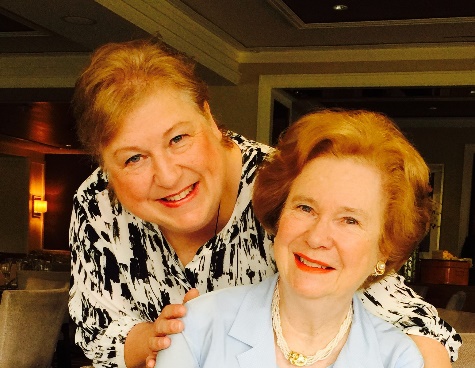
colleeen_momMy mother is 83 years old and loves her iPhone. She prides herself on her ability to use it, explore it, and discover new apps, features and functions. Her self-confidence in uncovering new features is not particularly high, and it is easier for her to appropriate new functionality when one of her kids shows her what to do. But once she has adopted it, she makes it her own, telling anyone who will listen about her newfound feature or app. She considers herself highly innovative among the senior set, as she has friends who do not even use email, much less voice-controlled texting. When she is relaxed and has time on her hands, such as when we are out to lunch together, she is insistent that we download the latest Uber app* for her or show her a new gadget on her phone. However, when she has a deadline, as she still does these days as she is revising a paper for a journal or preparing a lecture on her latest musicology research, her beloved technology can be annoying and frustrating, and she has no interest in exploring or new appropriation.

My coauthor, Scott Swain, and I study this process of technology appropriation among consumers of all ages. How do we come to experience a sense of ownership (Pierce, Kostova, and Dirks 2003) of intangible goods such as digital content or technologies? Under what conditions does a sense of ownership emerge? What are the outcomes? And what are the individual differences among us that enhance or detract from this process?

In one of our recent articles with James Gaskin (Kirk, Swain, and Gaskin 2015), we argue a key emotion that plays a role in the emergence of psychological ownership in a digital context is pride. While pride is felt and displayed in the body as a unitary emotion, it actually has two facets which depend on how consumers attribute its source (Tracy and Robins 2007). When my mother works hard to learn a new app, as she has done in mastering the ability to “call an Uber” when she needs it, she is experiencing authentic pride, attributed to her effort. On the other hand, if she thinks about how much better she is than her senior friends at using technology, she might attribute her success at using the app to this superior ability and a touch of hubristic pride might creep into the mix. We look at this consumer technology appropriation process through the lens of customization or self-design (Franke, Schreier, and Kaiser 2010; Moreau and Herd 2010), arguing that as consumers invest themselves in learning and interacting with digital technologies, the process is a kind of experienced or unintentional self-design. This investment of self elicits authentic pride which enhances psychological ownership.

The social aspect of digital technologies also plays a key role in the emergence of psychological ownership. Pride is a self-conscious emotion which is activated more strongly in the presence of others. For example, as consumers, as we think about creating content that is seen by others, this opportunity to validate our identity in a digital realm (Karahanna, Xu, and Zhang 2015) or even co-construct an aggregate extended self with others (Belk 2013) results in feelings of pride. When we attribute this pride to our own efforts, our sense of ownership of the digital content is enhanced. At the same time, when hubristic pride is an outcome, we enhance ourselves by valuing psychologically owned content and technologies more highly and telling other people about them.

Scott and I have conducted a number of studies that examine these and other ideas experimentally. We have found that we as consumers will experience stronger feelings of ownership of interactive digital content when we are motivated to enjoy ourselves than when we are trying to accomplish a specific task. But this depends on the connectedness we feel with others who may also be occupying the same digital space. We have also found that simply perceiving the opportunity to interact with digital content may be sufficient to elicit psychological ownership, depending on how involved we are with the subject matter at hand. Interactivity becomes a way to “touch” (Peck and Shu 2009) the intangible. We are also exploring the role of both facets of pride and how focusing on self versus others may have an impact.

Psychological ownership has piqued the interest of marketing researchers recently, and for good reason (Jussila et al. 2015; Kamleitner and Feuchtl 2015). Feelings of ownership have a strong effect on important marketing outcomes, such as product demand (Fuchs, Prandelli, and Schreier 2010), economic valuation (Brasel and Gips 2014; Shu and Peck 2011), and word of mouth (Kirk, McSherry, and Swain in press). While researchers are beginning to get a handle on the emergence of psychological ownership among consumers of tangible goods, Scott and I are trying to uncover an understanding of how consumers come to experience psychological ownership in an intangible digital world. Given the accelerating role digital technologies are playing in our lives, we may all have something to be proud of.

*Uber is an American international transportation network company headquartered in San Francisco, California. It develops, markets and operates the Uber mobile app, which allows consumers to submit a trip request which is then routed to sharing economy drivers (for more information visit www.uber.com)

Editor’s note:

That’s MY Beer: Locale, Ownership and a Little Story about the German Beer Market

Picture PO_Blog

Location, location, and location. That’s the mantra of marketers all across the world. However, we might not always appreciate the importance of location for business. In particular, we often ignore the social and psychological aspects of locality. Yet, locality is about much more than just geographic distance. Locale refers to social dimensions such as the role of space in our everyday activities. It suggests that the closer something is to our everyday activities, the more likely it is that we will form a connection to that something. The idea of a sense of place on the other hand suggests that we experience some things as psychologically closer to us than others. That is, these things have more emotional value to us. Importantly, both locale and the sense of place are key to understanding how consumers come to pay attention to products, services and brands.

A recent intellectual discovery is that locale and a sense place are also important for feelings of ownership a consumer may develop for different products and services. By feelings of ownership we mean the psychological state in which an individual feels a material or immaterial target is “mine” and part of “me.” The connection of proximity and “mine” may be that things located on and “growing from” a territory we know and understand both in terms of geography and culture may more easily fall with the realm of our psychological ownership.

Take for example the German beer market, which is well known to rely on the concept of regionalization as evidenced in the popularity of local craft breweries. When the production of beer is located in the consumer’s own territory, there is more readily the possibility that the consumer will experience a closer connection to the products of that brewery. This is even truer for beer brands that emphasize their regional character and corresponding values. Consider, for example, the meanings the inhabitants of picturesque Potsdam associate with Potsdamer Stange – a regional specialty of the area. The producing company strongly emphasizes the 200 year history of this light wheat malt that has a very special balanced taste to it, as evidenced in a recent field study by the authors. It is possible that for many Postdamer the Stange is familiar and provides a sense of home – it is “their” beer. In may well be that as part of the equation these people experience their impact and effort in their neighborhood as extending to the local brewery through various community processes – thereby contributing to the sense of ownership for the local beer.

This trend of regionalization can in fact be seen on other markets. Even globally operating brands capitalize on these effects by offering the sense of home in an increasingly globalized world. For example, why is it that US consumers tend to rather often select home brands when traveling abroad? We believe that selecting a brand they feel is “theirs” provides them with a sense of home and security. In other words, such brands serve as a psychological risk management strategy in the global context. There are spaces to dock your self to every once and while when exploring the unknown territories.

– Iiro Jussila (Lappeenranta University of Technology, Finland) and Marko Sarstedt (Otto-von-Guericke-University Magdeburg, Germany)

May we introduce: Floyd Webster Rudmin

“I was trying to find the cultural and cognitive foundations of possession and ownership.”

We have yet another addition to our Featured section to announce. This time we had the great pleasure to chat with a true legend of ownership research: psychologist Floyd Webster Rudmin. With his diverse background in philosophy, audiology, social psychology, law and business he managed to approach the topic of ownership and possession from a variety of different angles. The entrance to psychology of ownership and possession, however, was via political philosophy, not via consumer behavior nor via law. He was particularly inspired by the debate of communal vs. private ownership throughout history (Plato’s analysis and Aristotle’s evidence in the 5th century BC, holocultural sociology (sampling cultures) in the 19th and early 20th centuries, and saber-rattling nuclear missiles in the 1950s-1980s).

floyd_small

In his featured interview, which you can read here, Floyd talks about his personal path, important works that inspired his career, as well as his opinion on the future of ownership. Click here for the full interview.

Excited to Foreshadow

As many of you will have come to realize, 2015 appears to become the year of special issues on ownership. The topic is bound to leave a mark on or even enter the research agenda of many additional scholars in the near future. This is exciting and we hope to bring many of them together on this blog. The future of blog contributions looks bright. I am pleased to foreshadow a couple of upcoming posts.

We are excited to announce that the proofs for our special section on Ownership in the Journal of Behavioral and Experimental Economics have already been sent to the authors. A sneak preview is soon to follow.

The special issue on Psychological Ownership in Marketing in the Journal of Marketing Theory and Practice is even one step further. It is out now and digitally available. Marko Sarstedt, one of the key figures behind this special issue, has kindly agreed to share his take on the insights the special issue provides us with. Marko has been known to many due to his intense engagement with partial least square analyses. He is not new to the ownership community either. His interest in psychological ownership has created a discussion platform that I fondly remember. Last year he, together with Colleen Kirk, organized a special session on the topic at the 2014 Academy of Marketing Science (AMS).

Colleen, too, has kindly agreed to join us as a guest blogger and to share some thoughts that her intense engagement with psychological ownership has inspired. We are very excited to have her. She is the only person who has managed to contribute to both special issues. Given that the deadlines were not too far apart this really is a noteworthy feat.

So stay posted and of course post yourself or let us know if there is anything you want to share about ownership. And as always, if you haven’t yet become a “face of ownership” but would like to, simply drop us a line with your photo attached.

Best, Bernadette

To Have Or To Be: Upcoming Symposium at the 77. VHB Jahrestagung

We are delighted to announce that our proposed symposium on ownership with the title “To have or to be: the influence of (psychological) ownership on economic behavior” has been accepted for participation at the 77. VHB Jahrestagung at WU Vienna from May 27 – May 29, 2015.

The symposium will highlight the role of the psychological experience of an object as MINE or OURs in economic decision-making and discuss its breadth from various different lenses. More information on the speakers and the topics will follow soon. A short abstract summarizing the contents can be found in our event section here.